


© All rights of this website are reserved for Dr. Ali Beigzadeh Milani.
Join us :




According to Iran’s Capital Market News Agency (Sena), the government initially pursued financing through the issuance of participation bonds before the 1990s. Subsequently, in 2015, with the introduction of the Law on Removing Barriers to Production, the use of debt instruments was prioritized, leading to the development and implementation of new tools such as Islamic Treasury Bills, oil pre-sale bonds, lease Sukuk, Murabaha Sukuk, profit Sukuk, and general Murabaha Sukuk. The latest instrument, general agency Sukuk, which offers greater flexibility to the issuer, has yet to be operationalized.
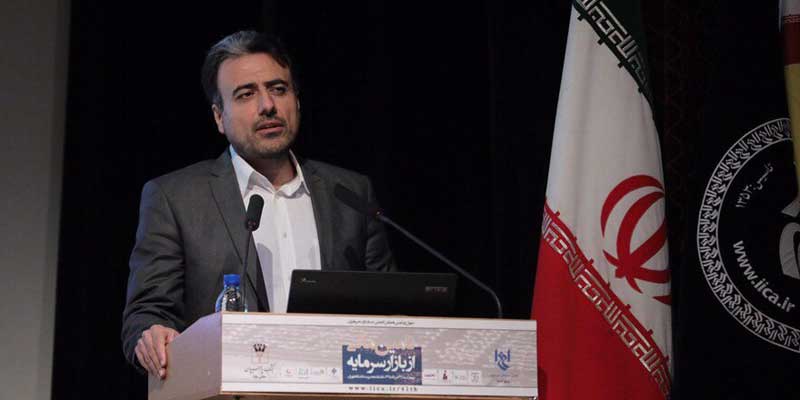
During a conference titled “Efficient Debt Instruments for the Government in the Current Context,” held at the Economic Research Institute of the Ministry of Economic Affairs and Finance, Ali Bigzadeh, CEO of the Central Asset Management Company of the Capital Market, presented proposals to enhance government financing through the capital market.
Bigzadeh provided statistics on government financing through intermediary institutions in the capital market, stating that the government has issued 446 trillion IRR in Sukuk through these intermediaries. This includes 49 trillion IRR in lease Sukuk, 57 trillion IRR in Murabaha Sukuk, and 340 trillion IRR under the profit Sukuk structure. He noted that all payments related to these bonds have been made regularly to date.
He further clarified that there are no restrictions for eligible private companies seeking to raise funds through Sukuk issuance in the capital market. Over the past four years, 58 Sukuk issuances have been conducted for private companies, while only six were for government financing.
Bigzadeh elaborated on the evolving trend of government financing through the capital market, reiterating that the government first utilized participation bonds before the 1990s. Following the 2015 Law on Removing Barriers to Production, new debt instruments were introduced and tested, including Islamic Treasury Bills, oil pre-sale bonds, lease Sukuk, Murabaha Sukuk, profit Sukuk, and general Murabaha Sukuk. The general agency Sukuk, which provides greater operational flexibility to issuers, remains unimplemented.
According to the CEO, the government currently employs Islamic Treasury Bills to settle contractor debts, general Murabaha Sukuk for purchasing goods and services, and oil pre-sale bonds or lease Sukuk for rolling over debt.
Bigzadeh offered several proposals to improve government financing through the capital market, noting that the government is a key player in the fixed-income securities market. He suggested that a shift in perspective, viewing securities as tools for policymaking rather than solely for financing, could enhance outcomes. Additionally, financing government projects through participation bonds or convertible participation bonds would generate assets from the proceeds.
He further stated that the interest rate on government bonds should serve as a benchmark for determining profit rates, with the secondary bond market providing an appropriate venue for establishing these rates.
The CEO of the Central Asset Management Company emphasized the need for systematizing government debt within the capital market and embracing transparency in interest rates. Such transparency would facilitate the genuine sale of bonds and encourage participation from retail investors.
Bigzadeh also addressed the concept of asset monetization, asserting that government financing should not be viewed solely through the lens of debt. He noted that most governments possess asset pools that can be monetized or tokenized to raise funds. Preliminary steps toward this approach are underway in Iran, with hopes that it will contribute to a larger and more dynamic debt market in the near future.
News source: